Puppy Out Of Breath

Puppy Out Of Breath
Doug's stories are now in a book: www.puppyoutofbreath.com

Friday, October 18, 2013

Exactly 3 Hours To The Kentucky State Line


The ad in the paper said: 
COME VISIT PADUCAH, ONLY 3 HOURS AWAY.


Ever since I first saw Paducah on a map as a kid, I wanted to visit a place with such an intriguing name.  So, I took a day off from work.  I left our house at 7:04 AM, and I crossed the Kentucky state line at 11:04.  The ad in the paper was correct.

What I found is that Paducah is a city of architecture, a city of history, and, most of all, a city of art.

Paducah is lucky to have a large number of 19th Century buildings still gracing its downtown.


The American-German National Bank:


Another bank:


The grand downtown commercial hotel:


Shop Historic Paducah:


Paducah is where I found out about America’s first sojourn into government health care.  President John Adams knew that America’s prosperity depended on merchant ships, and in 1798, health care was provided to merchant seamen.  It was then extended to the men who worked on the Mississippi and Ohio Rivers.


Paducah was the site of a Confederate raid in the Civil War.  The town displays its history in public, on its flood wall.  Over 50 flood wall murals describe the history of Paducah, including its industrial history.


Paducah was the home of Vice President Alben Barkley.  Barkley captured my imagination because of his moment of death.  He was giving a speech and quoted Psalm 84:10, saying "I would rather be a servant in the House of the Lord than to sit in the seats of the mighty."  He died on stage just minutes after saying that quotation.


Art abounds in Paducah.  The biggest tourist attraction in town is a museum of quilts and fiber arts.  But the city has deliberately sought artists to boost its economy.  They have an artist relocation plan, and pay artists to move to Paducah.


The artists get low-cost houses in Lower Town.  The house serves as a studio, a gallery, and a residence.  I talked to artists who had moved from Michigan, Vermont, California, and the State of Washington.  They were all ecstatic to be in Paducah.

Before heading back to St. Louis, I had to visit the town's piece de rĂ©sistance for a fan of architecture: the Paducah Post Office.  It is a midcentury modern building designed by Edward Durrell Stone.  It is a small-scale version of the US Embassy that Stone designed for New Delhi, India.


Paducah, Kentucky,which I had wanted to see only because it had an intriguing name, proved to be a city with intriguing architecture, intriguing history, and intriguing art. 


- . - .- . - . - . 


A 4-minute YouTube tour of Paducah:

http://www.youtube.com/watch?v=Y55ikhMl45g


- . - .- . - . - . 

NOTE: Doug's best stories have been collected into a book: Puppy Out Of Breath.  Price = $11.  You can purchase a copy at  http://www.puppyoutofbreath.com

Saturday, October 12, 2013

Gesticulating In Gratitude


The roads in Hawaii are mostly two-lane.  

We were on vacation, driving from Kailua-Kona to Hilo, when the car behind us wanted to pass.  We slowed down and pulled to the right to give the car lots of room to pass.  After the car passed us, the driver stuck his arm out the window and gesticulated at us.


What was that?  Was he mocking us?  

The driver had extended his thumb and his pinkie and had curled his middle three fingers to his palm.  And he shook his hand.  I started to get annoyed, but then I remembered something I read in a travel book about how Hawaiians use a certain gesture as a way of saying thank you.

The guy who passed us was giving us a Hawaiian thank-you wave.


St. Louis has a thank-you wave.  You simply extend all five fingers into a flat palm and move it right and left, like a windshield wiper.  The Hawaiian wave is more dramatic, probably because you can drive with your car windows open all year round in Hawaii.

I like being courteous to my fellow drivers in St. Louis.  And I like to have my courtesy acknowledged, but I only get a thank-you wave about fifty per cent of the time.


Every morning when I drive to work, I get an opportunity to be courteous.  There is a Mobil On-The-Run convenience store at a busy intersection.  If the light is red and there are six cars waiting for the light to change, the entrance to the On-The-Run will be blocked by the sixth car.  People who just bought their gas, coffee, or breakfast cannot leave the On-The-Run.

Unless the sixth car is me.  If I see five cars waiting for a red light, I will stop early so there is a big gap between the fifth car and me.  That way people can drive into or out of the On-The-Run.

Many people recognize my act of courtesy.  They wave their hand at me as they drive through the gap I created.  One driver, however, was busy consuming his breakfast as he drove, so he waved his breakfast as me: a 16-ounce can of Bud Light.


- . - .- . - . - . 

A favorite Bud Light commercial: "The Clothing Drive":

http://www.youtube.com/watch?v=8znLXlD33No


- . - .- . - . - . 


NOTE: Doug's best stories have been collected into a book: Puppy Out Of Breath.  Price = $11.  You can purchase a copy at  http://www.puppyoutofbreath.com

Friday, October 4, 2013

My Wish On Yoko Ono's Tree


Three of us entered the restaurant and started walking down a long hallway to reach the hostess stand.  The hallway was decorated with black-and-white historic sports photographs.

There was a woman in the hallway pointing to a photograph and asking a busboy to identify the person in the photo.  The busboy had no idea; he spotted me and told her: "The man in the beard will tell you who this is."

The woman turned to me in anticipation.  

I looked at the photo and told her: "This is Lou Gehrig, who was born in 1903 and lived at 307 East 94th Street.  My father was born in 1903 and lived at 329 East 94th Street.  My father and Lou Gehrig were boyhood friends.  At that time, New York City allowed students to choose their high school, and my father and Lou Gehrig both chose the same high school.

Lou Gehrig joined the high school baseball team and my father became the manager of the team.  Their friendship continued beyond high school; Lou Gehrig would send the Schneider family a Christmas card every year, even when he was playing exhibition baseball in Japan.

                          (This photo shows my father standing in the back row, 1st on the left.
                                                     Lou Gehrig is sitting, 3rd from right)
                                    
The woman in the restaurant hallway was fascinated by everything that I told her.  She told me that she walks in the yearly ALS fundraiser because she has a friend with ALS (aka Lou Gehrig's disease).

It was four years since I had set foot in that restaurant.  I certainly did not know that busboy.  There were three of us walking down the hallway; what would explain how the busboy picked out the person whose father was Lou Gehrig's childhood friend?

My high school classmate, Liz Bogen, had an explanation.  Liz Bogen once said “Doug Schneider leads a charmed life”.

I spent many years not believing what my classmate said.  I viewed my life as simply a life that just happens, not as a charmed life.

I am now in the last month of my 69th year --- it is a time to look back.

Looking back on: Growing up in a town with salt water on three sides.  Attending an Ivy League college.   Getting to teach in the most interesting school in the most interesting city in West Africa.  Being sent by the US Army, not to Vietnam, but to the West Coast, where I had never been before.  Living in Europe.  Getting into Information Technology just as it started to become a driving force in American society.  Following my heart and finding love and settling in Missouri in a house with a white picket fence and two dogs in the yard.   

Now, as I am about to begin my 70th year, I am ready to admit that my classmate Liz Bogen might have been right.  Ready to admit that there was something cosmic about a busboy singling me out to answer someone’s question about a black-and-white photograph hanging in a restaurant hallway.


Last summer I went to the St. Louis Art Museum, and headed straight for Yoko Ono's wish tree.  I wrote my wish on a tag and tied it on a branch.  Yoko took all the St. Louis wishes to Iceland, where they are now interred at the Imagine Peace Tower.


The tag that I hung on the wish tree said: "Wishing to continue a charmed life".

- . - . - . - . - .

Here is a 6-minute video filmed at the London Palladium.  Neil Hannon, the lead singer of The Divine Comedy, sings a tender song about his wish that his daughter will lead a charmed life:

http://www.youtube.com/watch?v=Csef7e_2SUA


- . - .- . - . - . 

NOTE: Doug's best stories have been collected into a book: Puppy Out Of Breath.  Price = $11.  You can purchase a copy at  http://www.puppyoutofbreath.com

Saturday, September 28, 2013

The Dewey Decimal System Is Not Kind To Africa


I worked at The School For Arabic Studies in Kano, Nigeria, for a number of years.  The school was like a Muslim seminary, turning out religion teachers.  However, Nigerian law said that you could not teach unless you were proficient in English, principles of education, and mathematics.

Mathematics – that is why I was on the staff of The School For Arabic Studies.


I volunteered to help out in the library, which had books in English and in Arabic.  Many of our staff members had graduated from al-Azhar University in Cairo, and they told me that our school had the finest collection of Arabic literature in West Africa.


I helped the librarian with the books in English.  I quickly discovered that the Dewey Decimal System is not kind to Africa.  American literature gets a whole range of Dewey Decimal numbers:  going from 810 all the way up to 819.  Nigerian literature, however, gets a little slice of the one Dewey Decimal number that all of Africa has to share: 896.

I was a little grumbly as I helped process the new books in English.

When not processing books, I wandered through the library stacks, where I noticed books that were irrelevant to the students at the school.  I stopped dead in my tracks when I saw The Yachting Handbook on a shelf.

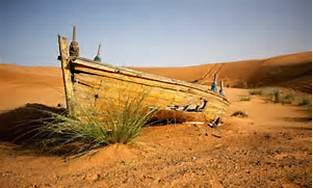
How could The Yachting Handbook ever be relevant?  In order to sail a yacht, you needed a body of water.  Kano is a-hop-skip-and-a-jump away from the Sahara Desert.  Kano has no lakes.  The Kano River appears on maps, but it has water in it for three months a year during the rainy season (see photo of the river below).


So, somebody must have donated this book, and the school library took it because "an irrelevant book in English is better than no book at all".

I discovered an obscure storeroom in a corner of the school campus.  I gathered all the irrelevant books and stashed them there. 

As I stashed them, I wondered who brought the book about yachts to Kano --- probably a yacht enthusiast from Britain coming to work in Kano for a couple of years.  What a surprise when that person found a landscape of sand and camels instead of a landscape of sand and beaches.

When I moved back to the United States, I got some disturbing news.  The library at The School For Arabic Studies had caught on fire one night.

When the students heard about the fire, they flocked to the school, with one goal in mind – they wanted to save the finest collection of Arabic books in West Africa.   The Fire Brigade kept them at bay, and the books all turned to ashes.

Then the school had to rebuild its collection both in Arabic and in English. 

I had a nightmare:  someone stumbles upon that obscure storeroom in the corner of the campus.  That person would see books in English, and think “an irrelevant book in English is better than no book at all”.


In my nightmare, The Yachting Handbook winds up back on a shelf in the library of The School For Arabic Studies in Kano, Nigeria --- just a-hop-skip-and-a-jump from the Sahara Desert.

- . - .- . - . - . 
Here is a 5-minute video about Kano's history, architecture, and government.  The soundtrack begins 18 seconds into the video:

http://www.youtube.com/watch?v=1_dMOYjmSS0

- . - .- . - . - . 

NOTE: Doug's best stories have been collected into a book: Puppy Out Of Breath.  Price = $11.  You can purchase a copy at  http://www.puppyoutofbreath.com

Saturday, September 21, 2013

Please Do Not Smoke The Declaration Of Independence


I help Charles Koehler teach a class at St. Louis Community College.  The class is called "Re-Live the 1904 World's Fair". 

The Fair was held in the largest urban park in the country, Forest Park, not very far from the College.


Our job is to make the Fair come alive for the attendees.  Charles, who is an audio-visual expert, has taken stereopticon pictures from the Fair and figured out how to project them in 3-D on a special silver oxide screen.  The attendees put on 3-D glasses and look at the buildings at the Fair 109 years ago.


"Building" is an understatement.  The smallest building was 8 acres in size; the largest was over 20 acres. So, they are called Palaces.


And there was not enough steel in the United States of America to build the Palaces at the St. Louis World's Fair.  The Palaces were built of wood frames covered in staff, a material that can be shaped and sculpted.  For the class, Charles pulls a piece of staff out of his pocket and holds it up.


He mentions that staff is a mixture of plaster and hemp.

Industrial hemp used to be a major export of Missouri, centered on the port town of Glasgow.  The wealth from hemp helped build the mansions of Glasgow overlooking the Missouri River.

Industrial hemp has many practical uses: rope, cloth, paper.  Then there is a type of hemp which is not industrial; it is recreational.  Charles has to explain that the World's Fair hemp is not the type you smoke.

However, the Federal government has declared both types of hemp illegal to grow in the United States.

One morning, I heard on public radio that the Declaration of Independence was printed on paper made from hemp.  I mentioned that fact at lunch that day, and I also mentioned that I have been puzzled why industrial hemp is banned in the United States.  


Someone at the lunch table knows a botanist who is gives expert testimony in the Missouri court system.  It turns out that industrial hemp is virtually indistinguishable from recreational hemp.  For court rulings, you need a complete plant, roots and all, to distinguish the two types of hemp.

Hence, it was simplest for the Federal government to just ban all types of hemp.  Industrial help became a controlled substance in the 20th Century, and the glory days of Glasgow, Missouri were over.

While Charles is holding up his piece of staff in class, I ask him how he found it.  He explains that he was walking through Forest Park on a sunny day and there was some construction going on.  He looked in a ditch and found the staff, long buried since the World's Fair Palaces were demolished in December 1904.

I then spoof Charles and tell the class that the real story involves being under cover of darkness and the wearing of infrared goggles and the use of a small pickaxe, accompanied by the sound of police sirens as Charles escaped from Forest Park with his staff specimen, which contains a controlled substance.


Hemp once boosted Missouri's economy.  Now it is something to smirk about.  I sure hope nobody tries to smoke the Declaration of Independence.

- . - . - .

A 1-minute video of Judy Garland singing "Meet Me In St. Louis":
http://www.youtube.com/watch?v=4JARDvdrAxk


- . - .- . - . - . 

NOTE: Doug's best stories have been collected into a book: Puppy Out Of Breath.  Price = $11.  You can purchase a copy at  http://www.puppyoutofbreath.com


Sunday, September 15, 2013

Getting To The Other Side Of The Ocean


I first crossed the ocean on a jet plane a year before jet lag was invented.  My first plane flight, from New York to Africa, was in 1965; the term "jet lag" was coined in 1966.


When the plane landed in Africa, I bounded off of it, ready to spend the next two years of my life there.  I was not sure what my living situation would be, I was not sure of what my teaching job would be like, but I was energized.

I next crossed the ocean from Hamburg to New York.

A mix-up in the Hamburg Airport put me in first class, compliments of Lufthansa.  They seated me next to Miss German-America.  First class was delightful; they even gave me a complimentary long-stem red rose, which I saved.  I gave it to my mother, after I bounded off the plane, energized and eager to see the US after two years away.
Then it was time to go back to Africa.  This meant flying from New York to London, having a long layover, and then on to Africa.  British Airways was putting me up at a hotel for the long layover.  The plane landed at Heathrow, I arrived at the hotel, and that is when it hit me.  Jet lag.


At first, I did not recognize it as jet lag.  I recognized it as grogginess, a sense of a large weight bearing down on me.  I dragged myself to the hotel restaurant for lunch.  I worried about being too groggy to catch the next leg of my flight, but I did catch the flight, and got back to Africa.

Then I read a magazine article that talked about how to combat jet lag.  The focus was on what to do before you before you got on the plane.  You must confuse your body, so that when you got off the plane, your body would gladly accept  the daily rhythm in the new time zone.


I tried it out: the plan was to have heavy greasy fatty food for all 3 meals one day, then light meals of vegetables and fruits the next, then grease the next day, and then vegetables and then get on the plane.  The plan seemed to work well, or maybe I thought it worked well because it gave me a good excuse to eat greasy breakfasts before going on vacation.

Then the literature changed.  

I read a magazine article about combatting jet lag; it said that the focus should be on what to do after you get off the plane.  You must not hide in a hotel room and sleep off the flight.  You must socialize, which will make your body accept the daily rhythm in the new time zone.

I stopped confusing my body with food.  When I got to a destination, I socialized and fell in with the local rhythm.  The new plan worked pretty well, and I avoided jet lag.

However, I was wondering if the new plan would work for my longest flight ever: 24 hours from Boston to Singapore.  The flight included a stopover at LAX in Los Angeles, and a dangerous stopover at Narita in Tokyo.  


The stopover in Tokyo was dangerous because there were benches in the international waiting room.  I had spent many hours sitting vertical in an airplane seat, fantasizing about being horizontal.  But I knew if I lay down on a bench in Narita Airport, I would fall fast asleep and miss the last leg of my journey.

I arrived in Singapore after 24 hours.  The taxi driver taking me to my hotel asked where I had flown from.  I said I had come from the east coast of the United States.


The taxi driver said, "Oh, you have traveled a long way.  This means you must meet some local people.  I know a lovely lady who would like to socialize with you"

I didn't take the taxi driver up on his offer.  But I was tempted to ask him if he had read the same magazine article I had about what people should do when they get off an airplane.


- . - . - .


A nice 3-minute YouTube video showing the lyrics to a song called "Jet Lag".  This is a cover sung by some young women with a guitar:

http://www.youtube.com/watch?v=tDdgUX2cNQw


- . - .- . - . - . 

NOTE: Doug's best stories have been collected into a book: Puppy Out Of Breath.  Price = $11.  You can purchase a copy at  http://www.puppyoutofbreath.com
https://mail.google.com/mail/u/0/images/cleardot.gif

Friday, September 6, 2013

Lying On My Back While Climbing A Stairway To Heaven


The way I tell the story: The Pacific Science Center saw that there were a lot of hippies on the streets of Seattle but there weren’t a lot of hippies inside the Science Center. 

How do you get hippies to come inside?  The answer: play rock music, use that new device called a “laser”, and put on a light show.


The laser shows became a hit – and spread to science centers and planetariums all around the country.

When I lived in Seattle in the 1970s, I went to a laser show.  I didn’t qualify as a hippie; the hippies were a pretty closed group with rigid rules for clothing, appearance, and behavior --- and no one would ever have mistaken me for one, unless it was my mother or my father. 

As I entered the Laser Dome at the Pacific Science Center, it seemed like a lot of the audience had prepped themselves chemically for the show.  There were no chairs.  I lay down on the floor amidst the chemically-prepped hippies, and let the music and laser lights cast their spell.

A laser show is actually a live show.  The music is recorded but a laserist runs the lights that dance across the dome.


It was a nice experience.  At the end of the laser show, I got up from the floor, stretched, and strolled out into the Seattle night.  That was over 30 years ago.

I now live in St. Louis, where the Planetarium has decided to revive its laser shows from the good old hippie days.


Of course, I had to go.  The website said we were allowed to bring pillows.  I thought that might be a joke; I showed up at the Planetarium on a Friday night expecting someone to confiscate my pillow.

Nobody confiscated my pillow as the audience filed into the Planetarium.  We had a choice of a chair or a floor mat.  I took a floor mat, flopped down on it with my pillow, and waited for the laserist to start the show. 

I glanced around: everybody at the show was either an adult about my age or the grandchild of an adult about my age.  Some of the audience might have been chemically prepped, but it would have been with high blood pressure medicine. The adults were clearly looking forward to the show, probably because they had been to one in the dim past. 

The chairs were empty.  Everyone had decided to lie on a mat.

The laserist began the show.  The grandchildren stayed remarkably silent as the lasers formed patterns on the dome of the Planetarium.  Pink Floyd was playing and lasers were dancing when the Planetarium’s Zeiss star projector was turned on.  The night sky was projected on the dome as the lasers simultaneously danced across the dome.


The lasers kept on dancing overhead while the night sky started revolving – revolving rather fast.  I was on the mat with my head on my pillow realizing that I was having a vertigo episode while lying down.


The show continued.  Jefferson Airplane.  The Beatles.  Led Zeppelin playing Stairway To Heaven.  I was transported.  It was just like being back in Seattle.

Then the show was over, and it was time to get up from my mat.  Creak.  Groan.  One lady in the audience verbalized what we all felt: “This was a lot easier thirty years ago.”

OK, so it wasn’t exactly like being back in Seattle.

- . - . - . 

Here is a YouTube Trailer for the current Laserium show at the St. Louis Science Center (2 minutes long):


- . - .- . - . - . 

NOTE: Doug's best stories have been collected into a book: Puppy Out Of Breath.  Price = $11.  You can purchase a copy at  http://www.puppyoutofbreath.com