Puppy Out Of Breath

Puppy Out Of Breath
Doug's stories are now in a book: www.puppyoutofbreath.com

Sunday, February 24, 2013

The Temperature Of The Air On The Bow Of The Kaleetan


I have led downtown St. Louis architecture walking tours for many years now.  A favorite stopping point is the corner of 12th and Olive.  Across the street is the Central Library, built with funds gifted to St. Louis by  Andrew Carnegie.

Carnegie announced his gift of half a million dollars in a letter.  This letter had a typo --- however, the wealthy steel magnate was unwilling to spend money to have a secretary re-type the letter, so the typo was fixed by hand.

Carnegie’s gift to St. Louis was appropriate.  Twelve blocks east of the Central Library is the Eads Bridge, the first steel alloy bridge in the world.  That bridge was Carnegie’s first major steel contract.

St. Louis knew that great cultural institutions require great architecture.  It added one million dollars to Carnegie’s gift, hired Cass Gilbert, and proceeded to build a library taking up an entire city block.  Finished in 1912, the Central Library was so lavish that Andrew Carnegie got upset.  The man who would not pay to re-type a letter continued to donate money for libraries, but he put restrictions on his gifts so that no other city could go hog wild like St. Louis.
When my tour groups stand on the corner of 12th and Olive, I point out that the Central Library looks like it is in the shape of a square.  However, it is actually an oval with a square frame around it.  The oval is connected to the frame by four bridges.

I then take the tour group up the steps of the Library, through the bronze gates by Gorham and Sons, and into the Baths of Caracalla in Rome.  We then cross a bridge into the Great Hall, where the marbled floor is patterned after the floor of the Pantheon.  Every room in the Central Library is inspired by a room in Europe.

Because I lead architecture tours, I coax the fine arts librarian into opening a special room, built in Tudor style with a banquet table fit for Henry VIII --- except the table does not hold haunches of venison, it holds rare architecture books.

But in the touring through the building, some things were amiss: fluorescent lights cut into a carved ceiling, fake balconies to create extra work space, layers of grime, and the persistence of the old 1912 system to get a book.  The stacks were closed: you had to fill out a slip of paper, and hand it to someone at the main desk, and wait for your book to be retrieved for you.

The Library faced its hundredth anniversary, and made the decision to restore and renew.

This time the Library needed $70,000,000 in donations.  I helped reach this goal be buying a raffle ticket.  If I had won the raffle, John Grisham would name a character in his next novel after me. 

The $70,000,000 restoration was a success.  When I entered the Library after the restoration was finished, the building was so sparkling and glorious that I felt like I had never been in it before.  The carved ceilings are restored, the fake balconies are gone, there is no more grime, and the stacks are open.


In fact, the Central Library has now become a tourist attraction; just like it was when it was built one hundred years ago.

Click below (and then click on the Play icon) for a five-minute exploration of the building, with glorious music by Chris Zabriskie: The Temperature of the Air on the Bow of the Kaleetan.  (The Bow is the bow of a ship: the MV Kaleetan - a Puget Sound ferry):


- . - .- . - . - . 

NOTE: Doug's best stories have been collected into a book: Puppy Out Of Breath.  Price = $11.  You can purchase a copy at  http://www.puppyoutofbreath.com


Saturday, February 16, 2013

When The Moon Hits Your Eye


There were a lot of kids in my junior high school with names like Salorio, Fasano, Marino, Salerno, Lamberti, and Subbiando.  

So many people had Italian names, that it did not surprise me that our town had a bunch of pizzarias.  Some were in people's homes where they put dining tables out in the backyard.  As a teenager, friends would get together, pool their coins, and share a pizza pie sitting next to a grape arbor.

It did not surprise me that my junior high German teacher had an Italian name.  He was named Mr. Pascucci.  Or, as we called him, Herr Pascucci.

Mr. Pascucci told us many stories, including the story about when he was drafted into the Army and the Army sent him to Italy.  When he arrived in Italy, he was shocked.  Mr. Pascucci wanted to try pizza in Italy. However, he searched but there were no pizzerias to be found.  
I read Sophia Loren's first cookbook, and I remember her comment about pizza.  Sophia said that in Italy, pizza was food for the poverty-stricken.  

About the time that the Army sent Mr. Pascucci to Italy, a movie studio sent Sophia Loren to the United States.  When she arrived in the United States, she was shocked.  She expected to see evidence that America was a rich country; instead she saw lots of pizzerias.  She felt sorry for us poverty-stricken Americans.

I have been to Italy twice.  When I went to Italy in 1967, I did not see a single pizzeria.  My experience matched Mr. Pascucci's experience.

However, when I went back to Italy in 2010, there were pizzerias all over the place.  Something had happened in the forty-three year interim.

So, I combined Herr Pascucci with Sophia Loren and came up with my history of pizza:

The Italians who immigrated to the United States in the late 19th/early 20th centuries were poverty-stricken.  They were used to eating a baked piece of flat dough with some tomato sauce and cheese on top.  They opened up pizzerias when they arrived in the USA.

My guess is that pizzerias survived in Italy until World War Two.  As Italy recovered from the war, the country prospered and people were ashamed of eating pizza because it was a sign of poverty.  So the pizzerias were shuttered.

Then along came Mr. Pascucci the soldier seeking out pizza.  Then jet airplanes were invented and they flooded Italy with American tourists, all of them seeking out pizza.  When the Italians realized that Americans were willing to pay good money for a baked piece of flat dough with some toppings, they started opening up pizzerias to feed the tourists.  

When the Italians realized that Americans were willing to pay a lot of money for a “gourmet” pizza, they opened up more pizza shops.  Pizza no longer had a stigma, and Italians started eating pizza again.


So, I conclude that that pizza died off in Italy in the 1940's and picked up in the 1950's and has snowballed ever since.  Maybe, just maybe, the snowball was started by Mr. Pascucci, my junior high school German teacher, walking around in an army uniform asking Italians where he could find a pizza.   

- . - .- . - . - .

On YouTube, Dean Martin sings about the moon hitting your eye like a big pizza pie (3 minutes):

http://www.youtube.com/watch?v=Q22UBqZcB9g


- . - .- . - . - . 

NOTE: Doug's best stories have been collected into a book: Puppy Out Of Breath.  Price = $11.  You can purchase a copy at  http://www.puppyoutofbreath.com

https://mail.google.com/mail/u/0/images/cleardot.gif


Saturday, February 9, 2013

Counting Countries


When the Army assigned me to the Fort Lewis School Command, I was pleased to find out that I would be working alongside civilians.

One of the civilians, Ada Miller, was married to a retired Air Force officer.  The Millers often invited soldiers from the School Command to come to their house to socialize.  They knew what a pleasure it was for soldiers to get away from the barracks and be in a home atmosphere.

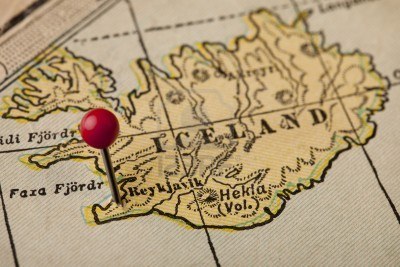
I always accepted the Millers’ invitations.  My favorite thing about their house was a giant world map that took up one entire wall of their kitchen.  There were a lot of pins in the map, marking the places where the Millers had either lived or visited.


I saw a pin in Reykjavik and got excited.  “You have been to Iceland!”   “Yes,” said the Millers, “Our plane refueled there.”

I was shocked.  These nice people who invited soldiers to their home were cheats!  How could they say that they have been in Iceland if all they did was sit on a plane while it was refueled?


I keep a list of countries.  Not refueling countries, but countries where I have spent time. 

Years ago, I met some friends in a restaurant in Zomba, Malawi.  The restaurant was at the top of a hill and there was a one-way road leading to the restaurant.  The road was one way up the hill from 6:00 to 6:59 and one way down the hill from 7:00 to 7:59, and so on.  You had to plan your journey to the restaurant carefully.

At dinner, my friends’ nine-year-old son challenged me.  He wrote out a list of countries he had been in.  I wrote out my list and came up with 33.  The kid came up with 28.  He was downcast.  So, I proceeded to make out a different list: a list of countries I had been in when I was nine years old.  There were 2 countries on this list --- the USA and Canada, and I didn’t remember any of the trip to Canada because I was an infant at the time.  The kid felt better.

My next step in counting countries came when the woman sitting next to me in the waiting room of the Johannesburg Airport told me about the Century Club.  If you have visited 100 countries, you qualify to become a member.  Her husband was a journalist and had been inducted into the club. 

My list has now grown to 51, and I had forgotten about the Century Club until last week, when I stumbled across it on the Internet. 

Their website has a list of 321 countries.  Since there are 194 countries in the U.N., it is obvious that the Century Club is generous in its definition of a country: for example, they don’t list the United Kingdom – they list Scotland, Wales, England, and Ulster separately.  That ups my count to 53.

Wait!  Look!  At the top of the website, they say you can count a country even if you were there just for a plane fuel stop! 

So, my list grows by added Haiti, where I was herded into the airport gift shop while the plane refueled.  And I can add the Cape Verde Islands in the middle of the Atlantic Ocean, where the plane refueled at 3 in the morning and I drowsily stood at the airport terminal door listening to the sound of waves crashing on the beaches near the runway.


Of course, if it is OK to count a country even if it was just a plane fuel stop, then I need to revise my opinion of the Millers.  They weren’t cheats.  They really were nice people.  

- . - .- . - . - . 

In a 3-minute YouTube video, "Moderate Fighter" explains why he wants to qualify for the Travelers Century Club (but not for the Drinkers Century Club, which you join when you drink one hundred shots of alcohol in one hundred minutes):

 https://www.youtube.com/watch?v=QxnPsfJp2wo 


- . - .- . - . - . 

NOTE: Doug's best stories have been collected into a book: Puppy Out Of Breath.  Price = $11.  You can purchase a copy at  http://www.puppyoutofbreath.com


Saturday, February 2, 2013

Schneider For Guardian Of The Flag


I ran for political office when I was thirteen and Dwight D. Eisenhower was President of the United States.

I declared my candidacy for Guardian of the Flag.  This was a position in our junior high school; the guardian stood on stage and led the Pledge of Allegiance before every school assembly.  I was eminently qualified: I knew the Pledge by heart.


My opponent was also eminently qualified.  His name was Roger Pitman and he also knew the Pledge by heart.  However, I had an advantage because Roger’s father was a doctor and my father worked for a printing company.

That meant I could get free campaign tags printed up: SCHNEIDER FOR GUARDIAN OF THE FLAG. The tags had strings so people could attach them to a shirt button.

The other offices up for election were student council president, vice-president, treasurer, and secretary.  The school bunched us into two groups of five candidates, forming political parties.  The idea was to make our junior high election more like a national election.

We named ourselves the “Pyramid Party”.  Pyramids are a symbol of wisdom and endurance.

Our opponents were more audacious.  They named themselves the “Rock And Roll Party”.  This was audacious because rock and roll was a new phenomenon.  Only two years had passed since Bill Haley and Elvis Presley had their first hit records.

Members of the Pyramid Party were paraded in front of various social studies classes for question-and-answer sessions.  I was ready for the big question for the guardian of the flag: do you know the Pledge of Allegiance by heart?  However, the social studies classes focused their questions on the big guns: the candidates for president and the vice-president.

Sometimes members of both the Pyramid and the Rock And Roll Parties were in a social studies class at the same time.  Ten people lined up in front of the blackboard.  During one of these sessions, a Pyramid candidate taunted the opposition by calling rock and roll a “baby”.  In response, a Rock And Roll candidate called a pyramid an “antique”.

That candidate was my opponent, Roger, and his comment went viral throughout the school.  He won the election.
However, as runner up, I still got to appear at the junior high assemblies.  My job was to take the flag out of its floor stand and hold it at a respectful angle while Roger led the Pledge of Allegiance.

A new school year began.  Roger and I were ready for our debut.  We stepped out on stage and stood next to the flag. I reached over to take the flag out of the flag stand.  Tug.  Tug.  The flag would not come out.  Tug again, no luck.

Was this some kind of practical joke?  Had someone deliberately tightened the screws holding the flag in place so I could not get it out?  I did some quick thinking and picked up the flag while it was still in the stand and held it at a respectful angle.

My stint as runner-up for Guardian of the Flag taught me that I should always check my equipment in advance --- and taught me that a candidate with a clever comment like “antique” will win an election no matter how many printed campaign tags the other candidate has.

- . - .- . - . - . 

YouTube video (2 minutes): Eisenhower changes the Pledge of Allegiance in 1954: http://www.youtube.com/watch?v=itEeWkB3es0


- . - .- . - . - . 

NOTE: Doug's best stories have been collected into a book: Puppy Out Of Breath.  Price = $11.  You can purchase a copy at  http://www.puppyoutofbreath.com


Saturday, January 26, 2013

Sheryl Crow Will Take Your Mind Away


The dental assistant reclined the dental chair, and I immediately began to think about Switzerland.  Chalets.  Heidi.  Cow bells.  Cheese.  Alpenhorns.  That is when I realized the power of distraction.

Lying in the dental chair, I was staring up at a photo of Switzerland cut out of an old calendar.  Someone had taped it on the ceiling to distract me.  

To distract me from the dental procedure I was about to undergo.  Yes, I was under anesthesia, but the photo was meant to take my mind out of the dental office to someplace far away so I would not focus on what was happening inside my mouth. 

Distraction was another form of anesthesia; it worked.

Then I went to a new dentist, who did not have a photo of Switzerland on the ceiling.  I needed to find something to distract me.  The hardest part of a dental procedure for me is ignoring the sound of the drill.  I fear what I hear; so, I brought a Walkman with me and played tapes while the dentist drilled away.  Sheryl Crow's music took my mind away.


The Walkman morphed into an iPod.  Sheryl Crow continued to take my mind away, helping me through 32 cancer treatments, distracting me from the sound of the machine that shot radiation into me.

My iPod helped me every time I needed it --- until I got a tooth extracted a couple of weeks ago.  On the “Universal Tooth Numbering System”, it was tooth #18.  It was rotten; it needed to go. 

I was ready for the extraction:  

1. The dental surgeon had pumped my bloodstream with Novacaine


 2. The dental surgeon had pumped my lungs with wonder-working nitrous oxide (apparently, no one calls it laughing gas any more).


3. My headphones and iPod were ready to distract me.


The dental chair reclined.  Suddenly my iPod music sounded faint.  I tried fiddling with the iPod --- something not easy to do when you are numbed and gassed and lying horizontal.  I swirled the iPod wheel; I pressed the center button.  The music was still faint.

The drill was not faint.  It made a racket as it ground through tooth enamel.

The dentist’s voice, however, was louder than the drill:  “This is a nasty one.”  “The tooth is fighting me.”  “This may be the most difficult extraction of my career.”

I was not too numbed and gassed to know that the surgeon was in his sixties, and has had a long career.  What was happening inside my mouth?  Where was Sheryl Crow when I needed her?

Finally the dentist won the fight with tooth #18.  The drill stopped.  The dentist explained that most people have two roots on tooth #18, but I had surprised him by having three roots.

Then the dentist told me that he liked my music.

That was it!  There was no problem with my iPod.  Instead, I was too gassed up to figure out that the headphones had slipped off my ears during the procedure.  That’s why I could barely hear the music. 

But the surgeon could hear the music.  Sheryl Crow took his mind away.

. - . - . - . - .

Here is Sheryl (and her audience) singing The First Cut is the Deepest, recorded in St. Louis on a cellphone (4 minutes):

   I would have given you all of my heart 
   But there's someone who's torn it apart 
   And he's taking just all that I had
   But if you wanna try to love again
   Baby, I'll try to love again, but I know

   The first cut is the deepest


- . - .- . - . - . 

NOTE: Doug's best stories have been collected into a book: Puppy Out Of Breath.  Price = $11.  You can purchase a copy at  http://www.puppyoutofbreath.com


Saturday, January 12, 2013

Struggling For Air, Struggling For Lunch


At the point where Paraguay, Brazil, and Argentina all meet, there is a huge waterfall: Iguazu.  When Eleanor Roosevelt visited Argentina and saw Iguazu she said, "Poor Niagara!  This makes Niagara look like a kitchen faucet."

In 2012, my buddy Randy and I went to Iguazu Falls National Park to experience a waterfall so wide you cannot see from one end of it to the other.

Entering the park, we encountered signs showing large photos of hands. All the hands had big gashes in them.  We were not sure how these signs related to us; so we hiked past the signs, through the jungle, and came to a cliff top.  Iguazu Falls was thundering in front of us.  Major waterfalls and minor waterfalls, over 200 in total.


We climbed down to the boat ride at the base of the falls. I knew about The Maid of the Mist at Niagara Falls, where you were issued a raincoat and the boat got close enough to Niagara Falls to wet the passengers with mist.  The Argentines, however, did not issue us raincoats.  Instead, they gave us life jackets and rubber bags.  

This boat would be doing more than getting close to the falls; this boat would be actually going into the falls.   In spite of knowing what to expect, I was not calm as the captain revved up the engine.  I put my wallet and my eyeglasses in the rubber bag.  The fact that there was a staff member on board taking photos was a bit reassuring --- the boat company obviously expected me to survive so I could buy a photo when the boat ride was over.  

The boat went into a wall of white falling water.  I ducked.  Water came pounding down on me.  I was deafened; I was drenched.  I had only one thought in my mind: will I be able to breathe in the middle of a waterfall?  It was a struggle, but I got some air.  

Then we were out in the open air again.  Breathe.  Wait, what are all the Argentines on the boat saying?  "Mas!  Mas!  Mas!"  

Just as I was wondering if Mas! was the Spanish word for More!, the boat went into the falls again.  I ducked and managed to get some air.  We were out in the open again, but my fellow passengers were eager for more.  We went in a third time.

Once the boat pulled away from the falls, it was eerily peaceful.  We disembarked, and began the climbing the steps up the cliff, thinking about lunch.


On the top of the cliff, some school girls on a field trip had settled onto benches to eat the lunches their mothers had packed for them.  As we walked past the girls, we noticed eyes peering out of the underbrush: coatis. 

A coati is a type of South American raccoon.  Coatis are diurnal.  The ones in Iguazu Falls National Park have switched from a diet of tarantulas and rodents to a diet of tourist food.


A bunch of coatis came out of the underbrush and proceeded to grab the schoolgirls’ lunch bags.  The girls jumped up, screamed, moved away.  One girl struggled with a coati over her lunch, but the coati won.

I felt sorry for the girls who had lost their lunches.  But I was not going to be a hero and try to retrieve their lunches from these animals.  I had realized why the national park put up signs showing large photos of hands with gashes.


We spent ten days in Argentina.  The highlight of our visit was the time we spent hunched over, water pounding down on us, struggling for air.

. - . - .

Iguazu Falls plays a major part in the 1986 film, “The Mission”, with Robert De Niro and Jeremy Irons.  Here is the movie trailer (2 minutes):

https://www.youtube.com/watch?v=Y-l2-Q7vODc


- . - .- . - . - . 

NOTE: Doug's best stories have been collected into a book: Puppy Out Of Breath.  Price = $11.  You can purchase a copy at http://www.puppyoutofbreath.com/?page_id=108

Saturday, January 5, 2013

Jungle Cats Peering Down At Me


My friends were going away for 5 days over Thanksgiving.  They asked if I could do them a favor by keeping an eye on their house and feeding their cats. 


Of course, I said yes.  However, the favor was not as simple as it seemed.

First of all, I lived in Minneapolis and my friends lived 13 miles away in Fridley, Minnesota.  One night on this long drive, I noticed a lonely election campaign sign in a field in Fridley.  It caught my eye because it was 5 feet by 3 feet and said “Vote SCHNEIDER for City Council”.  The election was over weeks before, and the poor sign was sitting out in the cold.  


Since my name is Schneider, I grabbed the sign, and took it home to my nice warm apartment.

Second of all, it was November in Minnesota.  This means snow.  On the first night, I got to my friends’ house after we had a 3-inch snowfall.  I dragged their snow blower out of their garage.  I was an apartment dweller and had never once operated a snow blower in my life.  I figured out how to use it and cleared the driveway. 


However, luck was against me.  On the fifth night, the night before my friends were to return, we had a 4-inch snowfall.   My friends were far away in nice warm North Carolina and did not know that I had to clear their driveway twice.

Third of all, the cats I had to feed included both domestic cats and wild jungle cats.  The domestic cats lived on the main floor of the house and ate cat food.   The jungle cats were from South America.  They looked like small bobcats, and were being bred for medical research.  The jungle cats were not kept in cages; they were all in a large walk-in enclosure in the basement.  They ate meat.  


On the first night, I went down the basement steps and looked at the cats in their walk-in enclosure, lit by a single light bulb.  The jungle cats were sitting on perches up high peering down at me.  Their food dish was on the floor.  That meant that I would have to bend over to put meat in their dish, exposing the back of my neck. 

What if one of the jungle cats decided I was an intruder?  Or got impatient?  Or was just plain ornery?  It could leap from its perch, rip open the back of my neck, and I would wind up bleeding to death lying alone on the cement floor of a basement lit by a single light bulb in Fridley, Minnesota, and the only people in the world who knew I was there were in North Carolina.

But it was November in Minnesota, which meant I had worn a big down jacket while driving to Fridley.  I went upstairs, put on my big down jacket and pulled the hood up over my head.  With my neck covered, I no longer felt vulnerable when bending over to put meat in the cats’ dish.
Actually I enjoyed doing this favor for my friends.  I could brag that I had fed wild South American jungle cats.  I felt proud that I had learned how to operate a snow blower without using an instruction book.  And I gained a special sign.  

I displayed “Vote SCHNEIDER for City Council” in my apartment even though I was not the SCHNEIDER on the sign and it was the Fridley City Council, not the Minneapolis City Council.  Visitors would see the sign and ask me if I had run for city council. 

I would lie and say: “Yes!  Did you vote for me?”  My visitors became silent.  I had gained a sign that made people squirm.


- . - .- . - . - . 

NOTE: Doug's best stories have been collected into a book: Puppy Out Of Breath.  Price = $11.  You can purchase a copy at  http://www.puppyoutofbreath.com
https://mail.google.com/mail/u/0/images/cleardot.gif